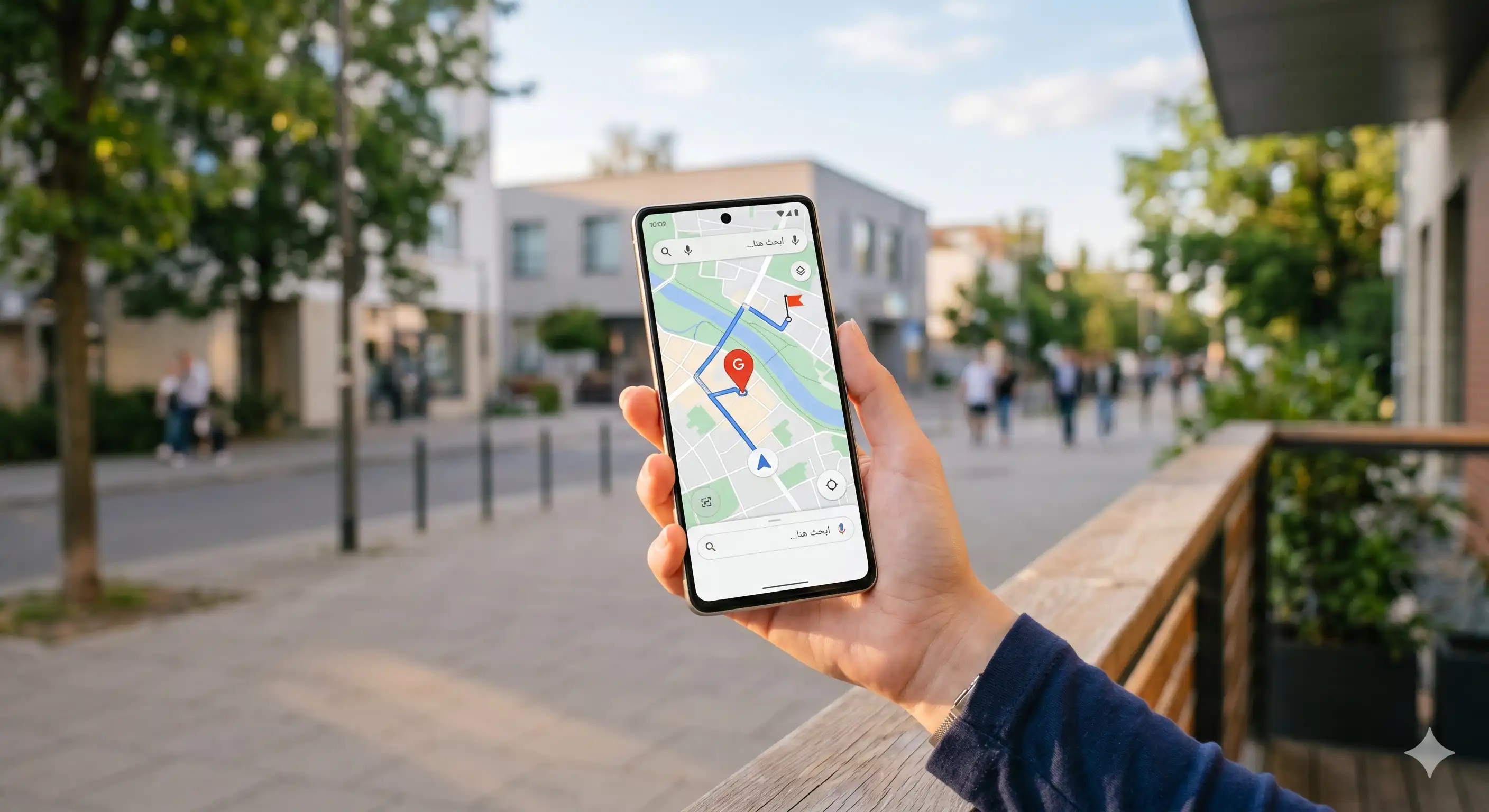
Not having your business on Google Maps today is exactly like opening a storefront on an abandoned, unlit street; you might have the finest products and top-tier services, but simply put, nobody will be able to find you. In a world where everyday purchasing decisions are driven by smartphone searches, Local SEO is no longer a luxury—it is the absolute lifeblood of any commercial endeavor.
As experts at Weblix, we witness daily how strategic, technically sound steps can transform a business from digital obscurity to search engine dominance. Whether you run a local coffee shop aiming to attract foot traffic on the streets of Amman, or a digital team offering bespoke tech solutions, Google's search engine is your primary storefront window. In this deeply technical and practical guide, we will walk you through the exact steps to not just "drop a pin" on a map, but to engineer a comprehensive digital entity that dominates the Local Pack.
Why is Google Maps an Indispensable Technical Investment?
Before diving into the execution, let’s speak the language of algorithms and data. When a user searches for the "best coffee shop near me" or a "web development agency," Google doesn't just scan the standard web index; it triggers its Google Local Search engine. This ecosystem relies heavily on three core ranking factors:
- Distance: How far is your business from the exact geographical coordinates of the user at the moment of search?
- Relevance: How accurately does your business profile and services match the user's specific search query?
- Prominence: How authoritative and well-regarded is your business across the digital landscape (reviews, links, citations)?
Adding and optimizing your business via your Google Business Profile (formerly Google My Business) is your master key to controlling these three critical pillars.
Step 1: Creating or Claiming Your Business Profile
The foundational work begins at Google's business platform. Do not assume this is merely typing your name and hitting "Save." The data architecture you establish here is the bedrock of your Local SEO.
1. Search Before You Create
The biggest technical error we encounter at Weblix is the creation of Duplicate Listings. Before initiating anything, go to Google Maps and search for your business name. Often, Google algorithmically generates a profile based on scraped data from third-party directories.
- If you find it: Click on the "Claim this business" option and follow the prompts.
- If you don't find it: Navigate to the Google Business Profile portal and sign in using a professional, dedicated Google account (strictly avoid using personal or shared email accounts).
2. Entering Your Business Name (Zero Keyword Stuffing)
Google’s guidelines here are notoriously strict. You must use the exact, real-world name of your business as it appears on your physical signage or official legal documents.
Technical Warning: Appending keywords to your name (e.g., "XYZ Roastery - Best Specialty Coffee") might give you a fleeting visibility spike, but it acts as a massive red flag. Your profile will face an abrupt, hard Suspension the moment a competitor flags it or the spam algorithms catch up.
Step 2: Architecting the Perfect NAP Profile
In the realm of Technical SEO, NAP stands for Name, Address, and Phone Number. This triad is sacred. This data must be 100% consistent across your Google Profile, your website footer, and every single local directory.
1. Geographical Address Accuracy
Enter your address with pinpoint accuracy. If you operate a Service-Area Business (SAB)—meaning you travel to your clients (like a cleaning or delivery service) and do not have a physical storefront that accepts walk-in customers—you must configure your profile as such. You will hide your precise street address and instead define the exact geographical polygons (cities, postal codes) you service.
2. Primary and Secondary Categories
This single configuration field has the highest mathematical impact on your "Relevance" score.
- Always select the most specific category available, not the broadest. If you serve pizza, select "Pizza Restaurant," not just "Restaurant."
- Methodically add secondary categories to cast a wider semantic net for long-tail search queries.
Step 3: The Verification Process
Google does not blindly trust internet inputs. To safeguard users from fake map listings, you must undergo a rigorous verification process to prove legal ownership or authorized representation.
Current verification protocols include:
- Postcard: Google physically mails a card containing a secure PIN to your listed address (typically takes 14 to 21 days).
- Video Verification: This is currently the most heavily enforced and standard method. You will be prompted to record a continuous, unedited video showing: the exterior of your location (street signs, storefront), the interior (tools of the trade, products), and proof of management (unlocking the front door, operating the POS system).
- Phone or Email: Reserved almost exclusively for high-trust entities with pre-existing digital authority.
Weblix Pro Tip: Never modify core attributes (Name, Address, Primary Category) while your verification is pending. Doing so instantly invalidates the process and forces you to restart the clock.
Step 4: Core Optimization for Search Dominance
Merely existing on the map does not guarantee visibility. Here is how we at Weblix fine-tune profiles for maximum algorithmic traction:
1. The Business Description
You have an allowance of 750 characters. The first 250 characters are mission-critical, as this is the snippet directly visible to the user before they click "read more." Naturally weave in your high-value keywords and clearly articulate your Unique Selling Proposition (USP). Write for human conversion, not just bot crawling.
2. Products and Services Schema
Never leave this section barren. Google relies heavily on structured data.
- For Retail and Hospitality: Manually add your menus, high-resolution product images, and exact pricing. This reduces friction and facilitates "Zero-click conversions," where users decide to buy before even visiting your website.
- For Service Agencies: Write rich, keyword-optimized descriptions for every distinct service you offer.
3. Visual SEO (High-Quality Imagery)
Google’s Vision AI actively parses the contents of the images you upload.
- Upload a clear, welcoming exterior shot to aid real-world navigation.
- Include high-fidelity interior shots, product close-ups, and images of your team in action.
- Technical Hack: Always rename your image files with descriptive, keyword-rich syntax (e.g.,
amman-specialty-coffee-shop-interior.jpg) before uploading, discarding generic camera filenames likeIMG_9087.jpg.
Step 5: Reputation and Review Engineering
Reviews are far more than just yellow stars; they are potent Local SEO Ranking Signals. A business that generates a consistent, fresh velocity of positive reviews will algorithmically outrank older businesses with stagnant profiles.
- Systematize the Ask: Generate your profile’s direct review link and embed it into your operational workflow—send it via WhatsApp after a successful service, email receipts, or place a scannable QR code directly at your point of sale.
- Respond to Everything: You must engage with both glowing 5-star reviews and harsh 1-star critiques. Responding to negative reviews with clinical professionalism and a desire to resolve the issue demonstrates excellent customer service to future prospects and mitigates the algorithmic damage.
Step 6: Local Citations and Link Building
Local SEO authority does not exist in a vacuum. For Google’s algorithms to trust your profile data, they need to verify it against third-party aggregators.
- Syndicate your exact NAP data to high-authority local directories, Yellow Pages, social media platforms, and Apple Maps.
- Absolute consistency is non-negotiable. If your address is registered as "St." on Google, do not spell it out as "Street" on Yelp. These seemingly minor discrepancies fracture your digital footprint and dilute your local search power.
Conclusion: Digital Presence is an Ongoing Operation
Deploying your business onto Google Maps is not a "set it and forget it" task. Dominating the local search landscape requires relentless maintenance: updating holiday hours, publishing weekly Google Posts to announce offers or new content, and rigorously analyzing backend insights to understand exactly which queries are driving your traffic.
At Weblix, we deeply understand that managing intricate technical marketing tasks is overwhelming for business owners who need to focus on their day-to-day operations. Leveraging our extensive expertise in Technical and Local SEO, we architect, optimize, and actively manage your complete digital footprint. We ensure your website and your map presence work in unison as an unstoppable lead-generation machine. Start claiming your space today, and stop handing your customers over to your competitors!